The Flash

APSOI

Your genes lean toward moving first. You read the signal early, and your body is already in position.

What your genes say

You have been told you are too quick. That you jump. That you react. That the better version of you would hold on and wait and see. You have probably tried to build that pause in on purpose, and every time it felt like running with a parachute open behind you.

The Flash already moving along a train platform while everyone else stands still, a service update overhead reporting a signalling fault

Here is what was going on in those moments instead. You were receiving. Your wiring and your mind were already reaching what the situation was producing: the tension under the small talk, the opening, the point at which a group tips one way rather than the other, well below the level the people next to you were working at. By the time they noticed anything at all, your read was already finished.

So the move that looked like a reflex was a finished sequence. Nothing in it was skipped. It simply ran faster than the room could follow, and the words for it had to catch up afterwards.

Your DNA is not just about eye colour or height. Deep inside your genes are instructions that shape how your muscles are built, how your body produces energy, how your skin guards itself, how your brain pays attention, and how your mind integrates information. Together, these five biological settings create what we call your DNA-Archetype.

Yours is called The Flash.

The short version

Your Sensitive skin registers heat, contact and every change around you at a lower threshold than the people standing next to you. Your Intuitive mind builds the pattern from that feed and hands you a direction before words arrive. Your Adaptive body has already been shifting to the right place, so nothing has to be set up when the signal lands. Your Power energy fires. Your Outward wiring sends it into people. The distance between receiving and moving is the smallest thing about you.

No bird soars too high if he soars with his own wings. William Blake, The Marriage of Heaven and Hell, 1790

Why DNA?

Think of DNA as a recipe book written for you before you were even born. Each recipe describes how to build a different part of you: a type of muscle fibre, a kind of brain cell connection, a layer of skin. You may not have chosen these recipes, but that does not lessen their influence on you.

Therefore, some things about how you work cannot be attributed simply to your habits or personality. You can think of them as your body's factory settings. Knowing your factory settings lets you stop working against your own grain, and start designing a life that fits yourself.

These are your factory settings. You did not choose them, but once you know them you can design around them.

The five settings that make you The Flash are: Adaptive Body, Power Energy, Sensitive Skin, Outward Social Wiring, and Intuitive Mind. Let us take a look at each setting.


Your five settings

Five settings make you The Flash. Each one is a choice your genes already made, and each one shows up in how you live.

Physical A

Adaptive

The genes behind your soft tissue build a frame set up for adjustment rather than one held in a fixed shape. Think of a sport bike against a freight truck. The truck carries enormous structural power in a straight line and asks the road to stay where it was. The bike reads the surface as it goes and keeps changing position to hold its speed through whatever the road does. Your body is built closer to the bike.

In daily life this looks like constant small repositioning. You change your angle, your approach, and your footing more readily than a Resilient build does, and you do it before anything has forced you to. You do not get through an obstacle by keeping your shape against it. You read the contour and find the line through it.

In your combination, the Adaptive body is what runs in the gaps. Between one surge and the next it is reading the ground and keeping you ready, which is why nothing has to be set up at the moment the pattern finally closes. The position has already been taken. That is a large part of why the distance between receiving and moving is as short in you as it is.

Energy P

Power

Your metabolic genes favour a fast, concentrated release rather than a long, even output. Under real demand your cells draw mainly on the phosphocreatine system and on fast-twitch fibre. A mains socket delivers the same modest amount all day. A bolt puts an enormous charge into a single instant. Your system is built closer to the bolt. It charges, then it fires.

So your best work arrives inside short windows at very high quality rather than across a long, level stretch. The trade is real: the phosphocreatine system needs proper time to rebuild afterwards. Cutting the recharge short does not buy you an extra surge. It lowers the quality of the next one.

What is specific to your build is that you do not get to choose when the surge is called for. The situation decides that, and it can decide at any hour of any day. So the charge has to be sitting there in advance. Put food in ahead of a demanding session rather than waiting to feel hungry, because for your combination the appetite signal is a late report. An under-fuelled Power system has all the right architecture and nothing in it to send.

Skin S

Sensitive

Your skin barrier genes build a thinner, more permeable outer layer than average. A canvas cover keeps almost everything out. A fine sensor array reads everything that reaches it. Your barrier sits at the sensor end of that range, so change reaches you as physical information rather than as a guess about people.

You register a change before anyone has announced it. The second the air in a room turns close. The moment a heater comes on or a door opens. A fabric or a soap that a room has just put in front of you. These reach you as signals rather than as interpretation, and they reach you early.

The same genes that build this finer layer make it quick to register touch, heat and anything rough against it. Your threshold for registering it is low, so the signal is inside the system early. What is specific to your combination is that nothing holds it there. The pre-positioned body, the charged energy system and the background pattern work are all standing by, so the pattern closes on a very fast feed and the move goes. That is what the word flash is actually describing. The cost sits on the same side of the ledger: a layer this permeable also takes on environmental load faster than it clears it, and dryness, tightness and heightened reactivity are the first honest readout you get of the total.

Social O

Outward

Your brain's social wiring, shaped by how your dopamine and oxytocin genes are expressed, is calibrated for breadth. The reward signal is strongest when you are inside a live field of people rather than beside it: several things moving at once, something actually being decided, a situation with direction in it.

Long stretches in an active setting tend to add to you rather than take from you. Your system has more to work with, the background pattern work runs on richer material, and the reward signal sits at its highest. Long stretches away from people cost you twice over, because the quality of the read thins out at the same time as the reward drops away.

The particular job the Outward setting does in your build is to decide where the release goes. Everything upstream of it is a tight cycle of receive and send. The Outward wiring aims that cycle at people: into a group, into a conversation with something at stake, into the momentum of a shared situation. Point the same charge at a form or a task list and it has nothing to push against, so nothing comes back the other way.

Mind I

Intuitive

Your brain runs a background integration network alongside conscious thought, and in your genetic make-up it is strongly expressed. It is not idling between tasks. It is running on whatever your system is taking in, assembling a picture of what the situation is producing and where the energy in it is going.

So you often know the right move before you can account for it. What surfaces is not a conclusion with visible steps behind it. It is a recognition, and it arrives whole.

The pairing that defines you is this network being fed by the fastest receptor in the build. Because the feed is live, the read is live. It is not what you worked out when the meeting started; it is what is true in this minute. And because the body has already positioned and the charge is already waiting, closing the pattern and moving are very nearly the same event. The words come afterwards. They are a translation of the read, not the source of it.

What you do well

Your five settings all pull the same way. You get the signal before the room gets it, and by the time it matters you are already standing where you need to be.

The Flash on their feet in the changing room talking to a seated team, a tactics board reading first half behind and the scoreboard showing them thirteen points down

First contact with the signal

Your threshold for registering change is the lowest setting in your build. What a situation is producing, the shift in a room's energy, the second a conversation tilts, the charge collecting in a group before anyone has put a name on it, reaches your Outward wiring and your Intuitive mind below the level almost anyone around you can work at. You do not have to work at reading the room. The equipment is doing it whether you asked or not.

The practical consequence is a head start, not a faster reaction. By the time the people around you consciously register that something has changed, you have finished the read and produced an answer to it. That matters most wherever the first response shapes everything after it: a group settling into its shape, a conversation at the moment of turning, an opening that will not stay open.

You are not quicker off the mark. You simply get the signal earlier than the people beside you.

Nothing to set up

Most builds need a moment between deciding and moving, because something has to be arranged first: a stance taken, a footing found, a position committed to. Yours does not. Your Adaptive body has been reading the ground the whole time and repositioning as it went, so when the pattern closes there is no set-up step left to run. The move leaves from a place your body already chose.

This is why what looks like a reflex from the outside is a finished sequence on the inside. Acting without a complete cycle is unreliable and shows it. Your speed comes from a cycle that has no wasted stage in it, which is a structural property rather than a mood. It works the same way on a bad day.

Come, my friends, 'tis not too late to seek a newer world. Alfred, Lord Tennyson, Ulysses, 1842

The charge lands in people

Your Outward wiring and Power energy do something particular when the release arrives in a live setting. A jolt of forward movement enters the situation that was not in it a moment earlier. Stalled conversations find a direction. Groups that were circling find momentum. Somebody carrying a thing they had not named finds it handed back to them in words before they had assembled any.

None of that is scattered energy. The background network has been building the picture out of everything you have taken in, so what lands is aimed at what the situation was actually producing rather than at what it looked like from the door. The aim is why the effect tends to be out of all proportion to the effort anyone saw you make.

The charge is aimed. That is why a small move from you moves a room.

Force that finds the gap

An Adaptive body does not fix itself in one place and push against whatever is in front of it. It reads the shape of the resistance and finds the line through. Put that together with an energy system that delivers a concentrated burst at the instant the pattern closes, and you get impact that is both strong and correctly placed.

The force is not reduced by being placed well. It is simply not spent on a surface that was never going to give. It goes to the gap, the opening, the angle where it will travel furthest against the least friction. That is why your work often reads as larger than the work it took, and it is a property of the build rather than a strategy you adopted.

Where it costs you

None of this is damage. It is the fastest cycle in your build meeting conditions that were never going to suit it.

The Flash sitting out at a crowded night market with eyes down while a friend keeps talking

Filling faster than you empty

The threshold that makes you first to read a room is the same threshold that lets the room in. In a well-paced week this costs you nothing. Across a stretch of days that are loud, crowded, overheated or full of hard physical contact, with no real gap anywhere in them, the load arrives faster than the system clears it, and it arrives in a specific order.

The surface reports first: dryness, tightness, reactivity to a product that has never bothered you before. Then the reads start coming in at lower resolution, so the sharp, exact reception you rely on turns approximate. Then the output degrades, and a Flash running on a full sensor does not gradually get quieter. It starts landing in the wrong place. Acting on the first report is far cheaper than managing the whole sequence.

The surface reports before the reading does. That first report is the cheap one to act on.

Firing on thin data

Where the field is rich, familiar people, a situation with a clear shape, a domain you have moved through many times, your speed is the whole asset. Where the field is thin, an unfamiliar group, ambiguous signals, a setting whose rules you have not learned yet, the same cycle completes anyway, because it completes on whatever has arrived. The move goes out having been built from too little.

It shows up as an answer at the wrong angle: accurate to what you received, wrong for what was actually there. The discipline is not to slow everything down, which would cost you the one thing your build is for. It is to tell a rich field from a thin one, and to hold the receiving phase open longer in the thin one. That is not doubting the read. It is giving it more to work with before it closes.

Rest belongs to the work as the eyelids to the eyes. Rabindranath Tagore, Stray Birds, 1916

Two recharges, not one

Your Power system needs real recovery between peaks, and the phosphocreatine reserves behind the burst need time and food to rebuild. For most builds with this energy setting, that is the whole of the recovery requirement. You have a second one. The sensory load your skin has taken on has to clear as well, and it clears on its own clock, in its own conditions.

The friction turns up whenever the calendar squeezes the interval: intensity back to back, long social stretches with no low-input hours anywhere in them, work that expects a peak every day. What hides the shortfall is that the two halves do not run on the same clock. The fuel side answers to hours and food, so it is simple to plan and simple to see. The other side answers to conditions instead of hours, so a diary can look generous and still hold none of what actually counts. A long lie-in after a heavy week pays one half in full and the other not at all, and the calendar shows a rest day either way.

Refuelling is half of it. The sensor has to empty as well, and it empties somewhere quiet.

Arriving ahead of the room

Your cycle closes before sequential reasoning has assembled its first version, and you have moved on to the next signal while the people around you are still working through the first. Where a group can nearly keep pace with that, the result is one of the best experiences your combination produces. Where it cannot, the same speed turns into friction, and not because you moved wrongly.

The answer is not a slower cycle. It is a short window where the cycle is visible: naming what you picked up, what it added up to, and what the move rests on. Not every time, which would cost you the asset. But wherever the people around you need to follow the read rather than only take the output of it, thirty seconds of that closes the distance without shutting the speed down.

Training your body

Each of these five settings asks for one specific thing. Give it and the instrument stays sharp. Miss it and the next flash is quieter than it should have been, and you may not be the one who notices.

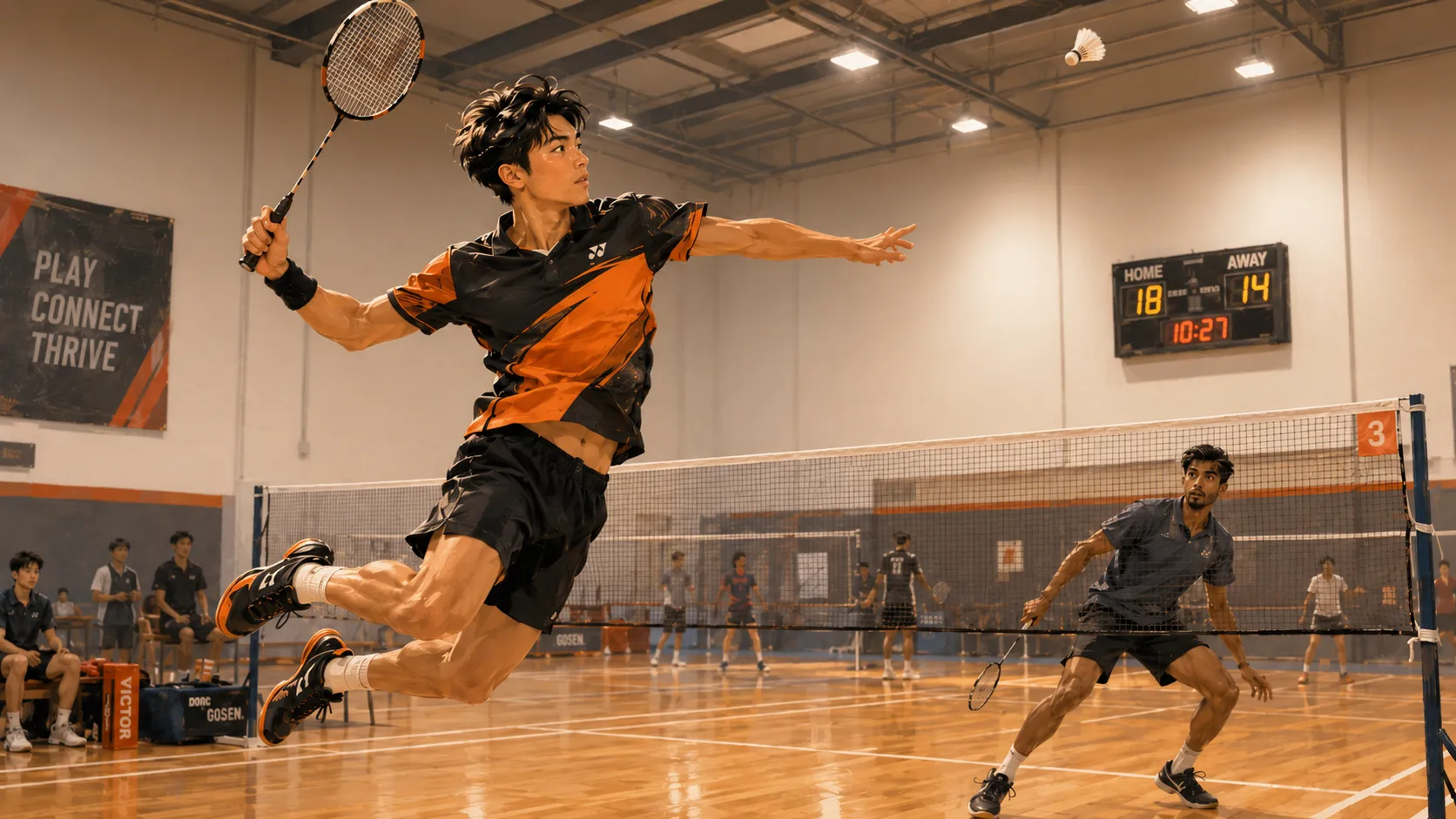
The Flash airborne over a badminton court with the racket back and the shuttle still dropping

Train where the ground moves (Physical)

Your Adaptive wiring develops on training that asks you to reposition under load rather than to hold one place under it. Badminton, squash, five-a-side, martial arts, climbing, dance, trail running on ground that is not flat, plus mobility work through full range. Anything where the demand keeps changing shape is training the thing your body is built to do.

Progressive overload still applies. Connective tissue and the systems regulating it need consistent challenge to build capacity, so the load should keep creeping up. What should not stay the same is the shape of the challenge. Months of identical repetition narrow the range you can work in, and the range is the asset.

Charge it before you need it (Energy)

Adequate protein at every main meal is the floor, because fast-twitch fibre rebuilds on it between surges, and on demanding days there should be more of it. Eat before anything that will ask for a peak, whether that peak is physical, mental or social, and eat early enough that it has settled by the time the peak arrives. Hunger arrives late for your build, so it is a poor cue and a worse plan.

After a real surge, the recharge window is part of the work rather than the reward at the end of it: food, sleep, and an actual drop in demand. Skipping it does not produce more output. It produces a quieter and less exact version of the next one, which is the version other people will judge you on.

Load the charge before the day asks for it. Your appetite reports too late to be the plan.

Treat the surface as an instrument (Skin)

Your surface reports earlier than a Protected barrier does, and the whole value of that sits in what you do next. Dryness, tightness and heightened reactivity turning up with no obvious cause are not cosmetic events. Treat one as an instruction for the next two days: take the input down, get a full night, and put something low-demand where the next crowded evening was going to be.

Keep a consistent daily hydration routine and treat it as maintenance on your primary instrument rather than as a beauty habit. Hold the baseline steady and a small deviation is readable against it; let the baseline slide and the first thing you can read is already a late one. Keep the instrument calibrated and it goes on telling you the truth.

Clear it and charge it (Recovery)

The charge side is the straightforward one to build in. Food inside the hour after a real surge, protein in it, then a night that is genuinely long rather than nominally long. Two ordinary nights after a peak day rather than one heroic one. That half is arithmetic, and you can put it in the diary a week ahead of the thing it is paying for.

The sensory half has conditions of its own. Genuinely low input: quiet, uncrowded, nothing being negotiated. Outdoors works particularly well, because your system goes on receiving there and none of what arrives asks anything of you. So does movement with nobody to be for, a swim, a walk, an hour with your hands in something. An enjoyable loud evening is not this. It is more of the thing you are trying to clear.

A loud night out is not recovery. It is the same input wearing a better mood.

How you think

Your thinking runs on what is arriving right now rather than on what you worked out earlier. It hands you a direction, not an argument, and it hands it over before the words are ready.

The Flash already turning away with a phone in hand while a colleague at the desk is still looking the answer up in a service manual

My experience is what I agree to attend to. William James, The Principles of Psychology, 1890

The read is always current

While you are in a room, your background network is integrating a continuous live feed: what people are producing, where the attention of the group is moving, what shape the situation is taking. This runs underneath whatever you are consciously doing. When enough of the pattern has assembled, it hands you a direction rather than a conclusion.

The practical result is that your read never goes stale. It is not built on the assessment you made when you walked in; it is built on everything up to this exact second, by a process that did not stop to think. You have been reading the whole time, so there is nothing to go back and check.

You get there by being there

Your processing is at its most exact when it is running on live material, and your Outward wiring means live material is mostly other people: real situations, real presence, something actually at stake. Preparation gives you a scaffold and it is worth having. But the right move is never something you work out in advance. You receive your way to it on the spot.

So the conditions that blunt this are the ones that take the field away: long stretches with nobody to read, decisions that must be committed to before any real contact with the situation, planning rooms that have no contact with the thing being planned. The design answer follows directly. Where a decision matters, build in real exposure before you make it. Go and see it. Have the conversation. Then decide.

Get into the room first. A decision made away from the field is made on old material.

Let the picture develop

You learn most in the middle of things. Depth builds from actual exposure, from being inside a live situation and responding to what it produces, rather than from studying the version of it that was written down. Frameworks and preparation are useful scaffolding, and they are not where the understanding comes from. Get into the conditions, let the signal arrive, let the processing run.

What most people in your position waste is the hour afterwards. Your background network consolidates during rest, turning what just happened into pattern that will be there the next time. A flash lights the room and then goes; the dark stretch after it is when the picture actually develops. Fill that stretch immediately with more input and you keep the experience without keeping the lesson.

The hour after a big situation is not empty. It is where the situation turns into something you can use.

Announcing the lightning

Your read arrives before the language for it does. In fast conditions, which is where you are most useful anyway, that gap costs you nothing. It costs you where people need an account of the thinking before they will move on it, and that is the piece of development worth actually working at.

What builds the vocabulary:

  • After a read that proved right, name backward: what reached you, what it added up to, what you did
  • Write it down rather than thinking it through, because writing forces the words to exist
  • Say the signal out loud in the moment, before the response, even in one short sentence
  • Notice which situations you can already narrate, and treat those as the ones you have vocabulary for

Do this often enough and the words start turning up closer to the read instead of well behind it. That is what changes the effect on a room. A move announced half a second before it lands is a move people can go with, and it costs the sequence nothing at all.

How you connect

Other people are the material your system runs on rather than a demand placed on it, and it is reading all of them at the same time.

The Flash mid-sentence at a kopitiam table with one hand up for the server and four friends turned toward them

There is nothing better or more delightful than when a whole people make merry together. Homer, The Odyssey, Book IX (trans. Samuel Butler, 1900)

Everyone in the field, at once

Your reward circuitry is calibrated for breadth, so a wide, active set of people pays you rather than charging you. Collaborative rooms, big loose groups, work with a lot of human traffic in it: these generate something for your system rather than draining it. That is the setting your biology was issued with, not a social habit you picked up along the way.

The wiring underneath is what stops that width from going thin. You are really reading the people in the field, one at a time and at speed, and the background network is really assembling where each of them is. So people on the receiving end of your attention tend to feel properly picked up rather than briefly acknowledged. That is an output of the build, not a technique.

Width does not cost you accuracy. Your system is reading every person in the field you are standing in.

Care that lands before disclosure

Your care shows up as attention. What somebody is carrying reaches you before they have put any of it into words, and you answer that rather than the thing they actually said. It arrives as being met accurately, at speed, without having had to explain first, and for most people that is a rare and very direct experience of being cared for.

It does not read as care everywhere. In relationships where closeness is measured in regular check-ins and things said out loud, your version can look discontinuous: complete when it arrives, then apparently gone in the space between. Translating it into a form people can consciously receive during those gaps is one of the highest-value things you can practise, and it costs you very little.

One more thing worth naming. Because your reception often runs ahead of what somebody has chosen to share, a few people will feel seen further than they meant to be. For most this is the best part of knowing you. For anyone who needs control over what they give away and when, it can land as exposure. Holding what you picked up lightly, knowing it without acting on all of it, is a real skill and it develops with use.

What you took on without noticing

The same wiring that makes your attunement precise means you take on what the people around you are carrying: what is unsaid, what is unresolved, the state somebody arrived in. Most of that does not leave when the conversation does. It stays in the system and it keeps taking up room.

The tell is a mood that turns up with no event attached to it. You are flat after an afternoon that went well, or unsettled after a conversation that was not about you. The useful question at that point is not what is wrong with you. It is whose this was, and where you picked it up. Asking it that way separates your own state from the material you took on, and the two want completely different answers. What is yours you have to deal with. What is not yours you only have to put down.

Quiet company, not no company

Because your reward system runs on the social field, restoring properly means lowering the demand rather than clearing the room. Cut everyone out and the reward signal drops to its floor, which produces flatness rather than recovery. Your build does not restore in an empty week.

What works is company that asks nothing: two or three people with no agenda, a walk with somebody who does not need managing, a shared activity where nobody is performing. Water suits your combination particularly well, because there is plenty arriving to receive and none of it is social. These are not preferences. They are how the read gets clear again, and how the next surge comes out cleaner than the last one.

Where you work best

There is work that pays for exactly what you are, and work that will quietly cost you everything you have while you keep trying harder at it. Effort is not what separates them.

The Flash directing a bellhop with one outstretched arm while holding a radio, in a hotel lobby mid event set-up

Where you excel

Put your combination where live reading, fast response and concentrated bursts of high-quality output are the actual job, and it does something few builds can. What you need in a role is straightforward: real people in front of you, conditions that keep changing, recovery built into the structure rather than borrowed from your evenings, and enough latitude to answer what is actually happening rather than what the plan expected.

You are worth most where the first response shapes everything after it and the window closes quickly. Long, undifferentiated stretches of identical output are the wrong shape for you at any level of ability. Work where somebody has to read the situation correctly and move first, with weight behind the move, is where this build produces results other people cannot account for.

Any one can hold the helm, when the sea is calm. Publilius Syrus, Moral Sayings, maxim 358 (trans. Darius Lyman, 1856)

What depletes your biological edge

Chronic stimulation with no structural recovery in it works directly against the accuracy you are paid for. As the load builds faster than it clears, sharp signals turn approximate, patterns that used to assemble cleanly arrive with noise in them, and the attunement people know you for has to be worked at instead of simply happening. That is a physical depletion pattern, and caring harder does not reverse it.

Work that expects the same peak every day extracts a separate cost from the energy system. Compressing the recharge does not get you more peaks over a year. It gets you progressively worse ones, each needing longer to come back from than a properly spaced surge would ever have needed.

The third mismatch is the quietest. Work that keeps you away from people, long solo stretches, heavy administration, almost no live human contact, takes away the material your processing runs on. There is little worth receiving, the background network has nothing current to assemble, and the reward system sits at its lowest. Three systems lose quality together, and the cause is supply rather than willingness.

Take the live field away and three of your systems go quiet together. That is supply, not attitude.

Leadership signature

As a leader you work by reception. You lead from what the field is producing this minute rather than from the version that was written down beforehand, and you move on it fast enough that the people around you experience the direction as obvious before they have assembled the same picture themselves. Teams describe leaders with your build the same way: unusually present, unusually attuned, and capable of turning a situation with a single decisive move.

The edge to develop is a translation layer around those moves. A leader who names what is being seen, briefly and in the moment, leaves the team able to read the next situation without you. A leader who only outputs multiplies the moment and leaves the room no sharper afterwards. The first version is slower to look impressive and far more powerful across years.

Best-fit roles

You do your best work where live situational reading, fast high-quality response, and the ability to raise the momentum of a wide field of people are what the job is actually made of, such as:

  • Sales, business development, and high-stakes commercial negotiation
  • Emergency response, acute care, and trauma-focused clinical practice
  • Facilitation, coaching, and live group process work
  • Competitive sport, athletic development, and performance coaching
  • Crisis communications and rapid-response public affairs
  • Acting, improvisation, live music, and other real-time creative work
  • Early-stage venture leadership and rapid market entry

A life that fits

Two things decide whether a week worked for you. Whether there was anything in it worth spending the charge on, and whether the sensor was empty again before the next one arrived.

The Flash's week laid out as one park: a stretch on the lawn, a bench conversation, a coffee counter, a doze in the shade, a pottery wheel, and a badminton court

Put one session outdoors (Physical)

Build the training week around variety, agility and repositioning rather than around one fixed movement loaded heavier each month. At least one session should be outdoors on ground that will not cooperate, so your body has to read what it meets and answer in real time. Mobility and joint work belongs in there too, not as injury insurance but as the development of the positional responsiveness the whole build depends on.

Charge before the demand (Energy)

Protein at every main meal, built in as structure rather than remembered on the hard days. When a day has a peak in it, put more in, and eat properly two to three hours ahead of the thing itself. Then plan the recovery meal with the same intention as the one before it. How good the next surge is gets decided by how completely you refilled after the last one, and nothing else negotiates that.

Act while the signal is small (Skin)

Your surface reports earlier than most, so the discipline is answering it while the report is still quiet rather than waiting until it is impossible to ignore. When dryness, tightness or reactivity appears without an obvious cause, act on the day it appears: take the input down before the next demanding thing rather than after it. Keep the daily hydration routine steady so a small change stands out against a clean baseline.

Keep people in the week (Social)

Build the diary so you are in live rooms regularly, because that is where your reception and your processing get material worth having. Watch for the weeks where the only faces are on a screen and the rest of it is solo. And when you need to step back from the loud end, step toward the quiet end rather than out altogether: two people over a meal, one conversation outdoors. Turn the load down without unplugging the sensor.

Name it backward (Mind)

The distance from knowing a thing to having words for it only shortens on purpose. When a read of yours proves out, spend five minutes going back along it: what reached you, what it added up to, what the move rested on before there were words for any of it. Write it. The vocabulary you build there is what eventually turns up in the moment, and that is the multiplier on everything else here.

A well-designed week

Physical
4 sessions across four different shapes: one racket or court sport, one hill sprint or interval session, one strength session, one hour of mobility through full range. One of the four outdoors, on ground that does not stay flat. On Sunday, set next week's load before the week starts, and set it down rather than up if the surface has flagged anything at all.
Mental
2 sessions in a live room with real people and a real outcome attached. Within an hour of one of them, ten minutes with a notebook: what you picked up, what it added up to, what you did about it. Write it, do not just replay it.
Social
Something live most days, with 2 or 3 of them engaging the whole cycle rather than just putting you in the building. Then cut the passive high-volume events that fill the sensor and give nothing back: the gig you are watching, the launch party you are standing at the edge of.
Recovery
One day in seven where almost nothing is arriving, put in the diary a week ahead and not traded away when the week gets busy. Same bedtime seven nights. One outing somewhere green or beside water, on foot, with nobody to be for.
Creative
One session where your hands are busy and nobody is watching: a pot on a wheel, a length of wood planed flat, an hour cooking something slow. Nothing there has to be read for what a person meant by it, so nothing stacks up behind it. This is the clearing process, not leisure.

The wave moves onward, but the water of which it is composed does not. Ralph Waldo Emerson, Essays: First Series, 1841

The long game

An Adaptive body stays useful for as long as it is kept mobile, varied and consistently maintained. The capacity that will matter to you at sixty is not maximum strength held in one position. It is the positional accuracy that puts you in the right place at the moment the signal comes, and that stays sharp on varied training and real recovery rather than on intensity.

Your processing deepens with the library it has to draw on. Every live situation you have moved through adds to it, and what each one leaves behind is not a rule but a shape you will recognise faster the next time. The reads get more accurate. The signals from your own surface get easier to interpret as you build the words for them. The distance between receiving and knowing what to do with it keeps shrinking as the library grows.

What compounds is not only speed or accuracy, though. It is how much of the field you leave lit. Early on the flash is fast and bright and slightly startling, arriving before anyone was ready and gone before anyone had caught up. With the words built and the recovery managed, it becomes something more: still fast, still complete, and now legible to the people standing in it.

That is when a moment turns into a direction.

You receive first. You move first. The work of a lifetime is keeping the instrument clean enough that the speed can be trusted with the things that matter.

Share with someone, and check your match.