
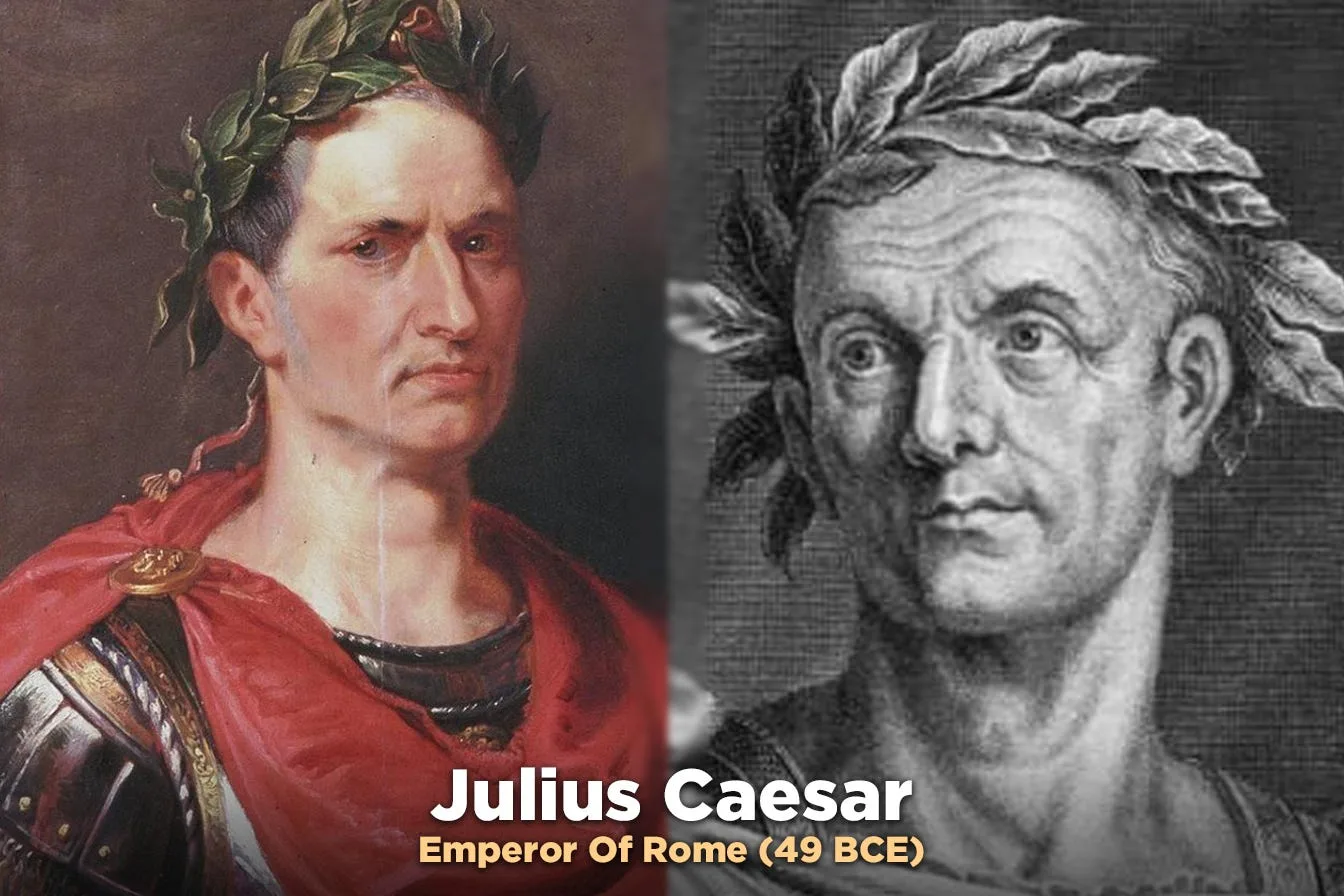
Destiny may have given Julius Caesar the birthright to the Roman Empire, but it has also given him a receding hairline.
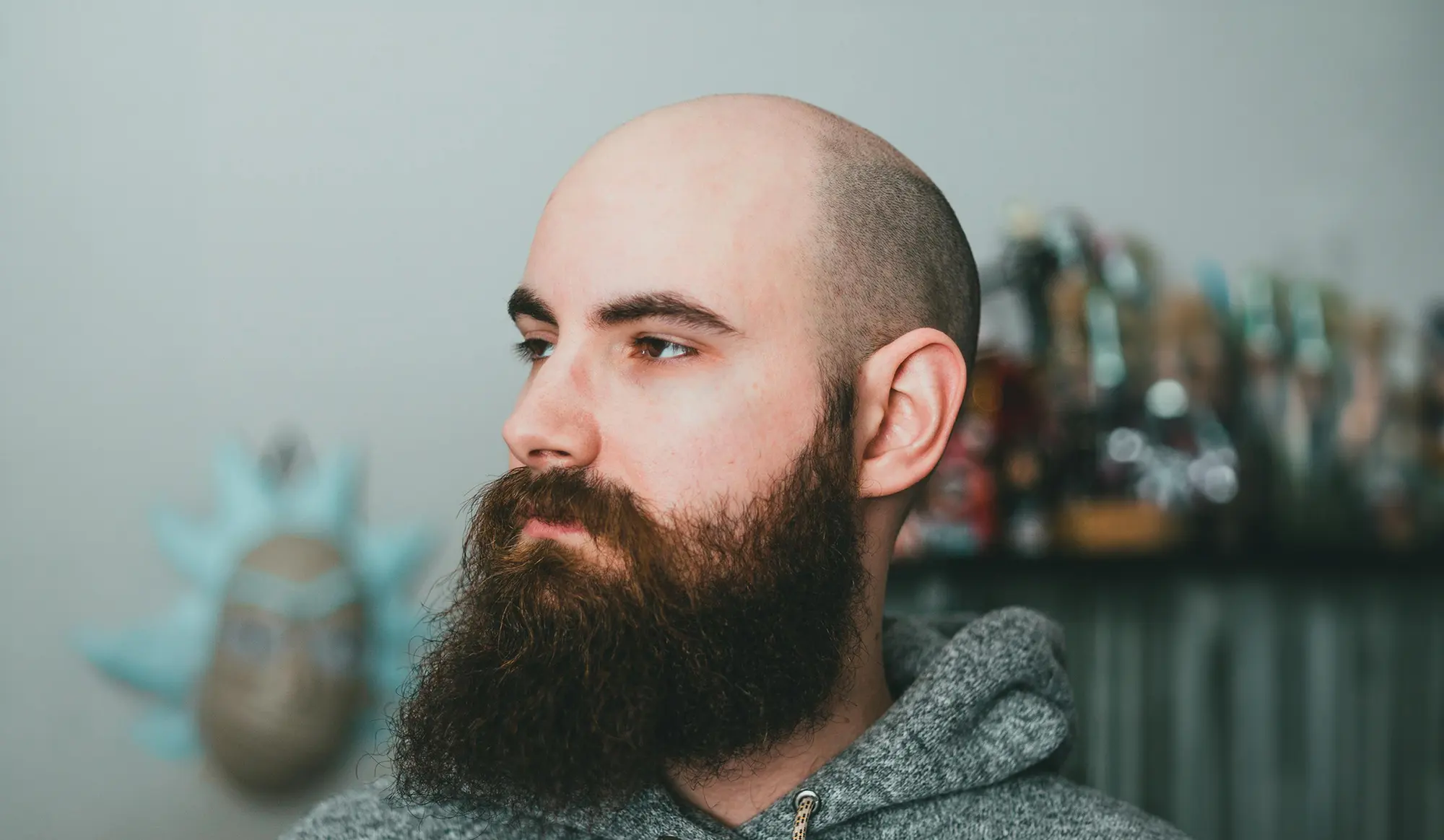
Throughout history, from emperors to everyday men, hair loss has been a source of both insecurity and, for some, a badge of honour.
So what causes hair loss, and can you fight back against your genetic destiny?
Is Hair Loss Genetic?
“Pull the hair on my head the wrong way, and I would be on my knees begging for mercy. I have very sensitive follicles.” Benedict Cumberbatch
Largely, yes. Research has linked 139 genetic markers to hair loss, and the main mechanism, DHT shrinking follicles, is regulated by the androgen receptor gene on the X chromosome.
Your hair follicles have a fascinating story written in your genes.
Research by scientists like Dr Angela Christiano has revealed that there are 139 genetic markers linked to hair loss, with many other genes playing a role from hair density to growth cycle.
The scientific term for common hair loss is androgenic alopecia, but it is better known as male pattern baldness.
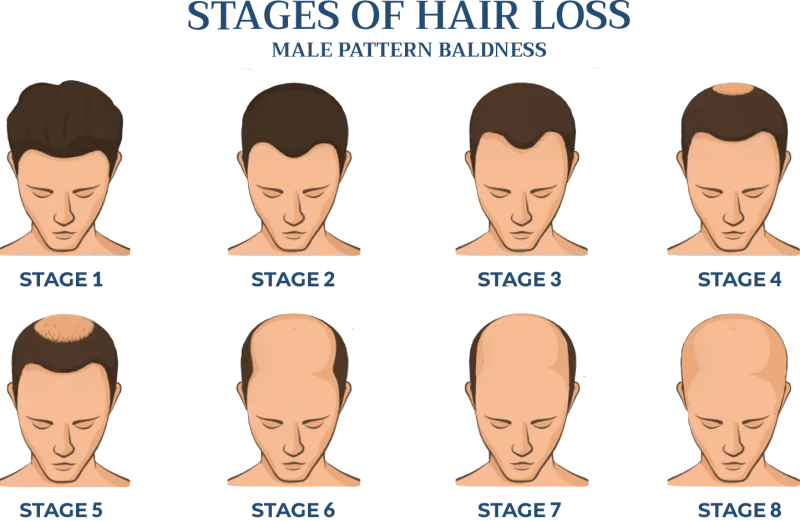
If you have it, you are not alone.
Roughly half of all adults (including women) will start to lose some hair by the time they hit 40.
This phenomenon has been linked to high levels of dihydrotestosterone (DHT), a by-product of testosterone that has been broken down for use by the body.
DHT wreaks havoc on hair follicles, shrinking them and shortening the hair growth cycle, leading to that dreaded pattern baldness.
The regulation of DHT is influenced by the androgen receptor (AR), a gene located on the X chromosome.
This explains why there is a strong family link to baldness, as the AR gene can be passed down from parent to child.
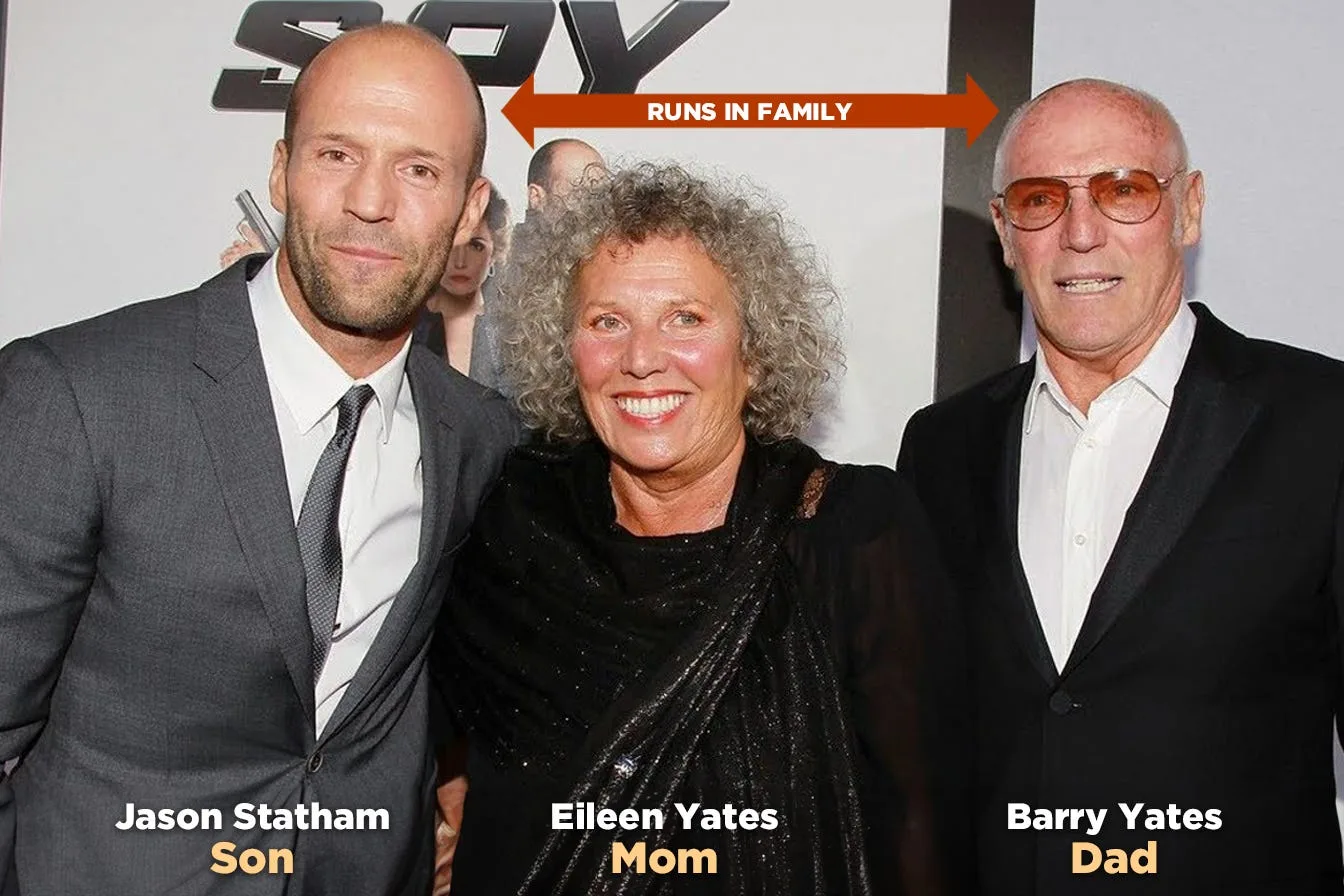
However, the story does not end there. Non-genetic factors can also be at play.
In a 2013 study, more than 3,100 Korean patients were found to show that smoking and drinking does have an impact on whether people lose their hair early.
Furthermore, research has also suggested that diet deficiencies in iron, vitamin D, and certain B vitamins can contribute to hair loss as well.
So what can we do about it?
Live Right, Grow Hair Right
“A healthy diet can help your hair stay strong and shiny. What you eat can also keep you from losing your locks.” WebMD
The good news is that understanding your genes can be a game-changer.
At-home DNA tests can give valuable insights into your hair-loss risk. This empowers you to take a personalised approach.
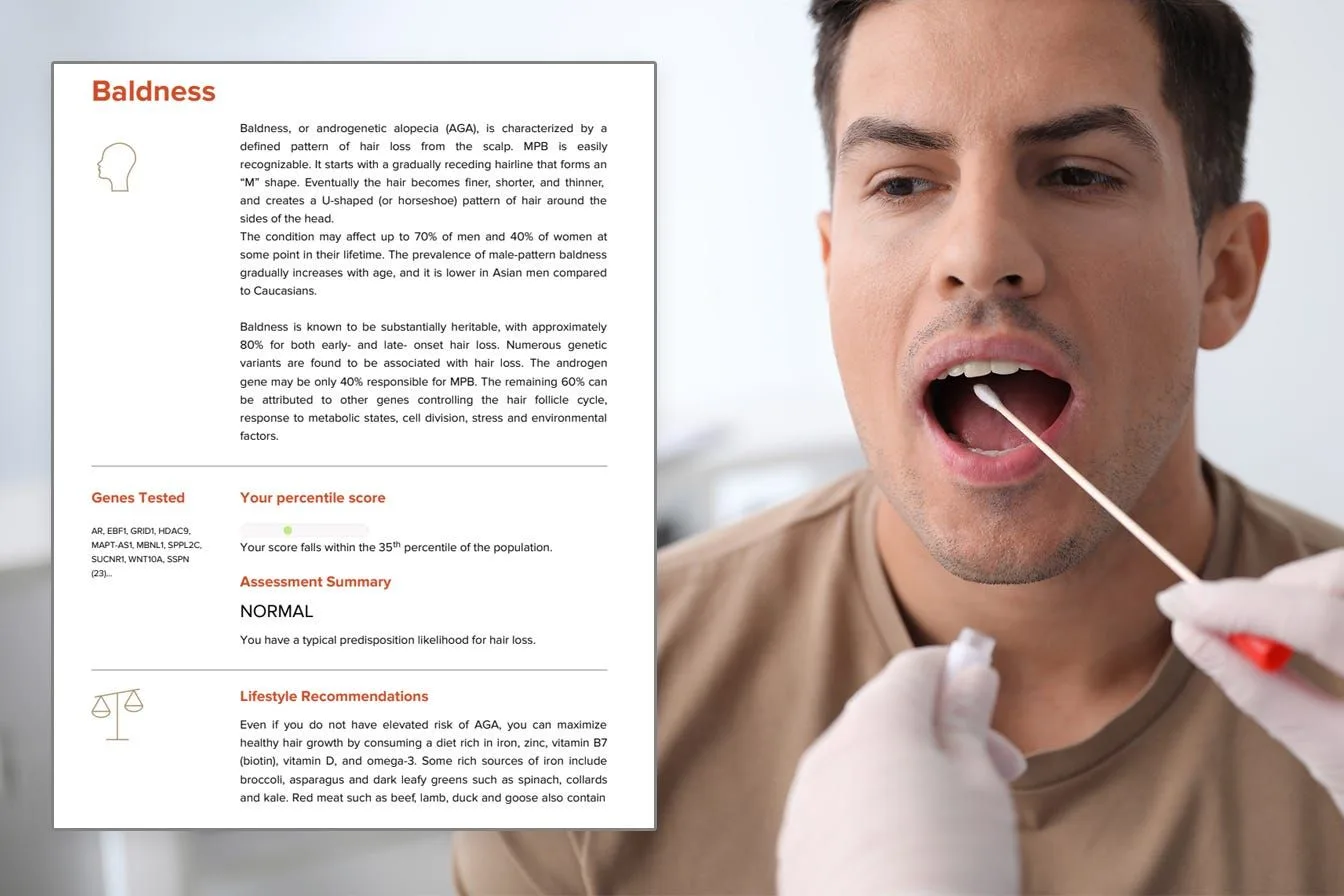
For instance, if your genes indicate a higher likelihood for premature balding, you might consider hair therapies from healthcare and wellness professionals to manage that risk.
Research also suggests that targeting specific nutritional deficiencies based on your DNA can promote hair growth. After all, every strand of healthy hair also needs the right building blocks.
Here is a glimpse into some potential hair management solutions that you can consider based on your genetic profile.
1. Personalised Diet Plan
Genes might indicate a need for specific nutrients. Protein, the building block of hair, can be found in poultry, beans, and fish. Iron, zinc, and omega-3 fatty acids may also be beneficial.
2. Prevent Sun Damage
Our genes influence UV resistance. Too much sun damages hair protein and its protective outer layer. Limit sun exposure and use sunscreen to prevent hair loss, discolouration, and dryness.
3. Stress-busting Activities
Chronic stress can trigger hair loss, especially for those genetically predisposed. Combat stress with exercise, meditation, breathing exercises, and good sleep habits.
Conclusion
“Anyone can be confident with a full head of hair, but a confident bald man is your diamond in the rough.” Larry David
While genetics play a role in hair loss, they do not dictate your destiny.
By unlocking the secrets held within your DNA, you can take a proactive approach to maintaining a healthy head of hair, and unlock a treasure trove of personalised solutions that can slow down balding, and even potentially regrow hair.
But if all else fails, remember this. Even celebrities like Bruce Willis and Dwayne Johnson can rock the bald look with confidence.
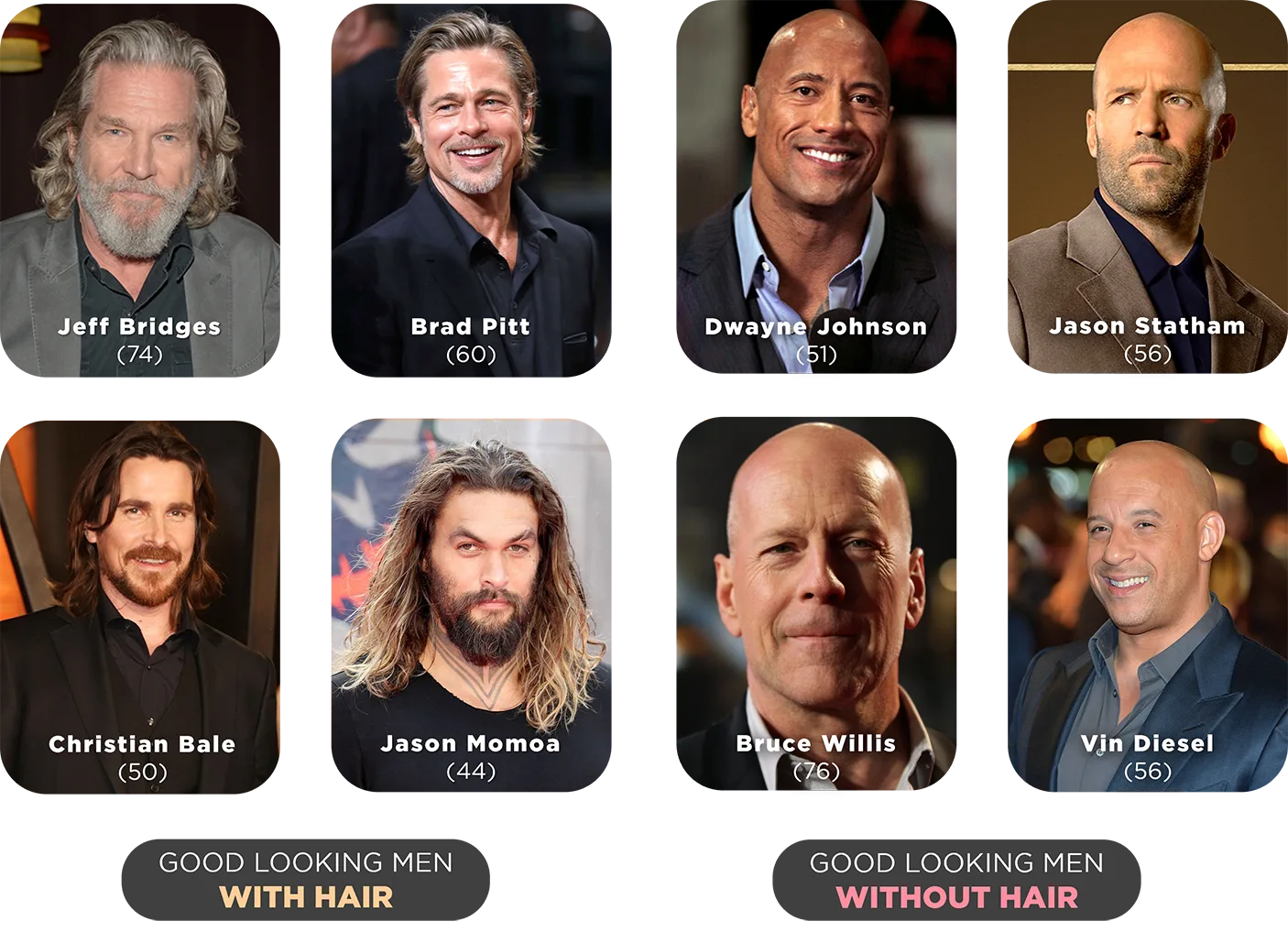
Regardless of your current or future hair situation, embracing your unique identity is key to looking good as you grow older.
After all, true potential comes from understanding your genes and taking charge of your well-being.
Sources
- Angela Christiano (Wikipedia)
- The only things that actually cure baldness, according to science (Business Insider, 2018)
- An epidemiological study of androgenic alopecia in 3,114 Korean patients (2014)
- Diet and hair loss: effects of nutrient deficiency and supplement use (2017)
- UV damage of the hair (2008)
Hair loss, sun resistance and skin sensitivity are read together in the Bio-Profile, which is where a report stops being a PDF and starts being useful.